Tuesday, October 17, 2017

Rigging supplies: New model speeds delivery, selection

Meeting construction deadlines and reducing downtime are critical whether the jobsite is a high-rise building or a highway infrastructure project. To safely and efficiently move heavy equipment and building supplies across the worksite requires not only cranes, but also a variety of specialty lifting, pulling and tie-down products to control and secure the load. 

At any time, progress on a construction project can come to a grinding halt when something unplanned occurs. For example, a piece of equipment may need to be installed, repaired or replaced – and specific equipment, such as a crane sling of a certain type, dimension, or construction must be available immediately to get the job done.

More frequently, purchasing rigging equipment is left to the last minute, often because it is an afterthought, or because it is unclear what specifications the rigging requires for the job. Nevertheless, with the project deadline looming, site supervisors cannot waste time querying suppliers that cannot deliver the goods right away.

Traditionally, however, the industry has looked to a variety of supply channels. This has included rigging houses to supply wire rope slings, other vendors for hardware like chain and cable, and still others for hoists or rope, and even more vendors to supply cargo control items.

The problem is that this scattered approach to ordering slows and complicates the process, delaying crucial orders from several days to a week or more. It puts essential items like wire slings at the mercy of the typical rigging house, which only begins fabricating the equipment after the order has been placed, then must ship it. Valuable time is lost as the rigging house reacts to the order, gathers necessary materials, and constructs the rigging.

Now to help make construction professionals more competitive, proactive rigging suppliers are following a new more responsive purchasing model. To this end, they are offering a host of vital capabilities including “Amazon-style” variety, emergency response, expert engineering support, and U.S.-only as well as international sourcing.

One-stop, certified rigging item shopping and same-day shipping
In response to the construction industry’s need to streamline purchasing, a growing number of suppliers are implementing an “Amazon-style” approach to inventory by stocking the vast majority of required rigging items in-house, ready to ship. This enables busy construction professionals to order all of their rigging-related equipment without going to multiple vendors.

“The trend is toward simplifying construction purchasing by offering the entire spectrum of products used for lifting, pulling and tying down including wire rope, chain, fittings, hoists, cordage, as well as a variety of slings and custom made lifting products,” says Tim Murphy, owner of Murphy Industrial Products, a national wholesaler of construction rigging products.

This one-stop model prioritizes stocking the variety, quantity, and selection of construction rigging supplies most commonly required, such as slings, chains, hoists, and steel cable, so they can be shipped immediately. Instead of having to go to several vendors to complete the order, the goal is to supply everything needed in one transaction.

This requires having all needed part numbers and specifics available at the point of order, whether by phone, website, or catalog. It also requires having all products under one roof, logistically prepared to ship nationally as well as track without delay.

“Most rigging shops wait until they get the order to begin fabricating the item before shipping it out, but that can cause delays of one to five days, depending on how complicated the material is,” Murphy says.

Because up to 10,000 in-stock construction rigging items are held in inventory by some wholesalers like Murphy Industrial Products that implement the Amazon style approach, same day shipping can be offered on up to 80% of typical orders.

As the construction industry struggles to adapt to jobsite surprises and ever-tighter construction schedules, the new one-stop shop model that prioritizes wide selection, fast delivery, as well as customization will help industry professionals stay one step ahead of the competition.

Rush and emergency response
Without required rigging equipment, a construction crane can sit idle along with much of the construction crew, costing perhaps tens of thousands of dollars per day in equipment rental, unproductive labor, and project delays.

“When we get a request, customers typically want their construction items that day or the next,” says Dan Kendrick, owner of Coastal Resources Group, a south Texas based construction item distributor. “We need quick turnaround or we will lose the order.”

While any vendor can rush a single order, traditionally few have organized their processes to expedite orders for the majority of their customers, including rush and emergency situations.

Now some construction rigging suppliers are streamlining their entire process from order to delivery around speed of response. While some websites are set up to enable one-click shopping for routine items, for instance, some rigging suppliers for the construction industry go well beyond this approach.

“When a rapid response is required, too often it may take a construction supplier several hours to reply to a customer request,” Murphy says. “If a supplier has their act together, its service reps should be able to respond to a request within minutes to an hour. They should know what their customers will likely need, and have it in stock, ready to ship for same or next day delivery.”

Beyond this, a responsive supplier should be reachable by a variety of methods to best accommodate customers’ needs in the field.

“In a true rush or emergency, I may not be able to place a formal purchase order,” Kendrick says. “Because there’s no telling where I may be when I may need to place an order, it’s important that I can text, call, or email a picture of what I need.”

Expert guidance and engineering support
Because construction worksites and workloads will vary and safety is critical, expert guidance and engineering support will be necessary at times to provide the optimal rigging equipment for the job.

Often site supervisors and purchasers do not know what rigging equipment specifications they need in terms of weight capacity, configuration, and options.

“When you are lifting building materials that can weigh several tons, ordering slings to ASME B.30.9 standards, for instance, is vital for safety,” Murphy says. “For a variety of reasons, it’s common for customers to have questions about their rigging when they are unsure what they need to get the job done.”

Murphy says knowledgeable and responsive inside sales staff is a good start in these cases, but engineering expertise may be required as well.

“If you’re dealing with slings of an unusual size, shape, capacity, an unbalanced load or other complications such as varied leg lengths, for instance, it is important to get help from an engineer,” says Murphy, whose onsite engineer is a former wire rope designer and has 40 years of experience solving unique rigging challenges.

Kendrick appreciates such engineering proficiency and has sought it out on many occasions.

“Rigging equipment may need to be engineered to meet certain capacities, tolerances, or configurations for safety and specific jobsite needs,” Kendrick says. “I’ve benefited from onsite engineering expertise on many occasions.”

Going beyond typical stock items
While there is a trend to stock all construction rigging equipment the industry needs under one roof, this does not mean that it cannot be modified. When equipment customization is required, such as in length, size, or capacity, this can be done quickly to suit unique jobsite circumstances.

Murphy says custom rigging is most commonly required when rigging length and capacity vary, but other factors such as different finishes (including galvanized and stainless) can also play a role depending on the application. “No matter how routine or custom the rigging, all products should be certified and all slings fabricated to exacting ASME B.30.9 standards for safety.”

Not only does the new “Amazon-style” purchasing model require rigging suppliers to carry thousands of parts on demand, ready to ship, but also it allows the choice of sourcing parts domestically or internationally, depending on needs.

Sometimes a construction job specifies only U.S. sourcing of rigging products and equipment, such as for certain government-related contracts. Other times international suppliers may be necessary to meet other construction project criteria such as geographic location or low-bid cost.

Whatever the case, working with a construction rigging supplier with a full-range of domestic and international sources can be an important final consideration in selecting a supplier with the flexibility to meet contract requirements.

As the construction industry struggles to adapt to jobsite surprises and ever-tighter construction schedules, the new one-stop shop model that prioritizes wide selection, fast delivery, as well as customization will help industry professionals stay one step ahead of the competition.

_____________________________________________________________

Del Williams is a technical writer based in Torrance, Calif.


JE Dunn’s redesigned offices showcase the company’s true colors

The office slide in JE Dunn’s new Atlanta headquarters.

You can’t fit a square peg in a round hole, a popular idiom asserts. So JE Dunn Construction didn’t try to. In converting three of its East Region offices into workplaces of the future, the company assessed its space needs, growth plans, internal functions, and, most importantly, the evolving work styles of its employees and embarked on a bold redesign. The results: a drastic departure from the traditional walled-in work environment in favor of workspaces more versatile, vital and high-performing. 

“The new offices much more accurately articulate how we work, the personality of our company and the direction JE Dunn is heading,” says East Region President Dan Kaufman, whose vision inspired the makeovers.

For JE Dunn offices in Charlotte, North Carolina and Savannah and Atlanta, Georgia, step one of the transformation involved relocating to other areas of their cities.

The Savannah office moved into a 92-year-old building in the Savannah Historic District. Charlotte claimed a spot in the city’s trendy Historic South End, among renovated factories and an eclectic mix of commercial and residential neighbors. Atlanta vacated conventional suburban offices to purchase and repurpose a two-story building in an emerging neighborhood that is home to the Atlanta Braves’ new baseball stadium.

The new reception area in Savannah, Ga.

Walking the talk
Packing up and moving was challenging. The bigger change, however, was Dan Kaufman’s vision of workplaces designed around open-office floor plans.

Some employees were immediately onboard. Others were less enthusiastic. Clearly, however, the shift was in line with the company’s culture of continuous improvement. Also clear: business as usual was not an option.

“We knew we needed strong employee engagement in re-designing the new spaces and we wanted everyone to have a voice,” Kaufman says. “We gave considerable thought to how to make it work.”

The transition process welcomed employee misgivings and doubts about the plan’s practicality. All three offices brought in outside architects, designers and other consultants to channel discussions toward results employees would feel good about.

In Charlotte, “Making the shift from a more traditional office to an open office was a huge mental hurdle,” says Paul Fenzl – Charlotte Division Manager. “But the project was a true team effort from day one. We assembled a diverse group of employees to represent our team, ensuring varying personalities were represented.”

The Charlotte office area.

Ideas at work
Controlling noise, providing privacy, accommodating technology, fostering employee engagement, promoting employee health and wellbeing— all were part of planning the rebuilds.

“This was a strategic, long-term investment in our people, our culture and our productivity,” Fenzl says.

JE Dunn self-performed much of the work to create climates that are minimalist yet warm, colorful, bright and flexible. Features include floor to ceiling windows, movable walls, wood and metal panels and exposed structural steel, concrete and brick. The Savannah office poured concrete to make customized restroom vanities and a conference room table. Atlanta workers refashioned a discarded concrete bridge into a reception desk.

The sprawling office spaces are subdivided into work-group “neighborhoods.” Neighborhoods comprise individual workstations featuring height-adjustable desks that allow employees to sit or stand while working, as well as technology enhanced collaboration areas. In Atlanta, a huge “pull plan” wall accommodates a project-scheduling process that assembles teams of trade partners.

Soundproof breakout rooms of various sizes offer privacy for conferences and phone calls. Nooks and crannies throughout the buildings are planned solitary work spots. Conspicuously absent: executive offices. Seating is randomly assigned— though Atlanta designates rooms for HR and legal.

From interactive white boards and enhanced video conferencing to room occupancy sensors, electric car charging stations and rooftop solar panels, the facilities are loaded with features that save time, money, resources and the environment.

Building sustainability
JE Dunn also built fun into the equation. Amusement and relaxation zones invite employees to lounge while sharing a cup of coffee, a glass of wine or a locally brewed beer. Shuffle board, pool, a putting green, ping pong, arcade-style video games and a workout room are offerings that encourage employees to lighten up and have fun as a team.

The Atlanta building gives employees the option of descending a flight of stairs from the second floor to the first, or whisking down a custom-designed, German-built stainless steel slide.

Re-designed as spaces where work, socializing and active living converge, the three offices definitely have Millennials in mind. “Well over half of our employees are runners, bike riders, cross-fitness buffs who work better when they are given time to play at the office,” says executive VP Mike Bartlett. “We respect their values and aspirations.”

The company also factored in growth. Modifications to the Atlanta building, for example, will accommodate future vertical expansion. Better suited than ever to host training sessions, receptions, and community events, the offices are veritable showcases.

Says Ryan Price, Division Manager in Savannah, “Our goal was to build high-performing, highly visible offices whose values of sustainability, community engagement and intelligent workplaces would promote JE Dunn’s legacy of building excellence.”


L.A. tapped for expansion by NYC-based Pod Hotels

Pod Hotels, the New York-based mini-room specialist, is slated to expand to Los Angeles in 2019 with the redevelopment of downtown Los Angeles’ old Hotel Cecil site. Read the Travel Weekly story here

2017 Women’s Retreat HiLites and 2018 Location

The 2018 Women’s Retreat date and location will be confirmed in the CCR Jan/Feb 2018 issue.

The 2017 Women’s Retreat was held in Savannah, GA August 3rd to August 6th, 2017 at The Andaz Savannah. www.savannah.andaz.com.

Check-In  Thursday Night Dinner Video    Friday Morning Savannah Trolly Tour
Friday Lunch Video  Round Table Discussion Video  Friday Night Dinner

WR 2017 Testimonials:

End-User Brand Participants: Value City Furniture/American Signature Furniture, Continental Realty, Crestpoint Companies, IHG, Lee Health, ShopCore Properties, Spence Diamonds, Topco, Tuesday Morning, Ulta, Woodforest National Bank, Bridgestone Retail Operations

Vendor Sponsors: Sargenti Architects, Genesis Lighting Solutions, Retail Maintenance Specialists, The McIntosh Group. Egan Sign, F&D Commercial, The Beam Team, Wallace Engineering, Fulcrum Construction, Automated Cutting Technologies, Connecting Source Resource Group & Rogers Electric

The 2017 Women’s Retreat editorial coverage in CCR Sept/Oct & Nov/Dec 2017 issues.

To be an end-user attendee or sponsor, please contact David Corson at 678.765.6550 or e-mail at davidc@ccr-mag.com.

Past Retreat Participants:
Ameristar Casinos, Concord Hospitality Enterprises, Corporex Select Service Hotels, Darden Restaurants, Davidson Hotels, The Dow Hotel Company, Gencom Group, Global Hyatt, Globiwest Hospitality Group, Heart of America Group, Hilton Hotels, Host Hotels & Resorts, Innkeepers USA, InterContinental Hotels Group, Interstate Hotels & Resorts, JHM Hotels, The Kor Group, K Partners Hospitality Group, Loews Hotels, Marriott International, Marshall Hotels and Resorts, Noble Investment Group, The Pomeroy Group, The Procaccianti Group, Red Roof Inn, Rosewood Hotels & Resorts, Sol Casinos, The Hotel Group, White Lodging, Wyndham Vacation Ownership , A.C. Moore Arts & Crafts, AMF Bowling, Ann Taylor, AutoZone, Badcock Furniture Home Furniture, Barnes & Noble Booksellers, Bebe Stores, Belk, BCBG, Cato, Chico’s, Payless ShoeSource/Collective Brands, Crate & Barrel, DSW, Finish Line, Fresh & Easy Neighborhood Market, Guess? Inc., Guitar Center, The Home Depot J.C. Penney, Jos. A. Bank Clothiers, Kohl’s, Limited Brands, Liz Claiborne, Luxottica Retail, Marc Ecko Enterprises, Marie Callender’s, OfficeMax, Rite Aid, Sheetz, Shoe Carnival, Spencer Gifts, Target, Thorntons, Tractor Supply, True Religion Brand Jeans, U.S. Cellular, Urban Brands, Wegmans, The Yankee Candle Company, Yum! Brands, 7-Eleven, Au Bon Pain, Chick-fil-A, Brinker International, Damon’s Grill/Max & Erma’s, Denny’s, Dickey’s Barbecue Restaurants, Dunkin’ Brands, Einstein Noah Restaurant Group, Famous Dave’s of America, Panera Bread, Red Robin, Sonic America’s Drive-In, Ted’s Montana Grill, Church’s Chicken, Zale Corp, Water Works, Retail Design Institute, Grand Hinckley Casino, Gentiva Health Systems, Gaylord Hotels, Papa Ginos, Vision Hospitality Group, Amscot Financial, Bob’s Stores, Converse, Desert Diamond Casinos, Fast Fix Jewelry & Watch Repair, Liberty Group, Rollingstone Restaurants & Lounge,  Spartan Stores, Stuart Weiztman, Total Wine & More, Tourneau, Wyndam Hotels, AT&T, Brown Shoe Company, Dollar General, FedEx Office, The Multnomah Athletic Club,  Starwood Hotel, Tuesday Morning, Academy Sports & Outdoors, Chipotle, Family Dollar, GNP Development, Heidi’s Brooklyn Deli, Naple’s Franchising, Office Depot, Pizza Studio, Smashburger, The Little Gym, LLC, Amtrak, Subway, Subway, Wawa Inc, Chico’s, Health First, J.Crew, Fun Brands LLC, US Cellular, Whataburger Restaurants,  Campus Crest, Cici’s Pizza, Grifols Plasma Centers, Sports Authority, Ann Taylor, Bank of  of America, Einstein Noah Restaurant Group, Francesca’s, Steak `n Shake Enterprises, Inc., Under Armour, Whitestone REIT, Whole Foods, American Signature Furniture, Broad Street, Cedar Lake Cellars, The Public Library of Cincinnati and Hamilton County, Hilliker Corporation, LA Dodgers, Level Office, Shop Talk 360,Value City Furniture/American Signature Furniture, Continental Realty, Crestpoint Companies, IHG, Lee Health, ShopCore Properties, Spence Diamonds, Topco, Tuesday Morning, Ulta, Woodforest National Bank, TJM Consultants, RPM Pizza/Dominos, Atlanta Housing Authority, Aaron’s Inc, Allied Partners, Barteca restaurant Group

WR 2012 Hi-Lights
WR 2013 Hi-Lights
WR 2014 Hi-Lights
WR2016 Hi-Lights

WR 2015 Hi-Lights


Project Frog Announces Autodesk Investment

Project Frog, a leading technology and building systems provider, today announced an alliance with Autodesk (NASDAQ: ADSK) to develop a transformational cloud-based platform to standardize and simplify data flow between the architecture studio, the factory and the jobsite. The agreement, which will strengthen the industrialized construction movement, is made possible through an investment from the Autodesk Forge Fund. The funding from Autodesk will accelerate the efforts of both companies to create a connected ecosystem linking architectural design to industrial fabrication.

“The building industry is beginning to look a lot more like manufacturing than traditional construction, and this investment offers significant opportunity to improve productivity, resulting in decreased risk and increased profit margins for construction teams and projects.”

“The reality of the building industry today is it’s facing unprecedented demand and scarcity of skilled labor,” said Drew Buechley, CEO of Project Frog. “In this climate, prefabrication is essential to delivering new buildings quickly and economically, while still offering a high degree of customization, competitive pricing and a quick turnaround. The only way to accomplish this is to use technology to simplify the process of moving a project from design to manufacturing, and then to the jobsite. What we are building with Autodesk is expected to be a truly revolutionary solution, enabling architecture, engineering and construction professionals to reap efficiency gains in the production of custom prefabricated buildings.”

Autodesk and Project Frog Collaboration

The Autodesk and Project Frog collaboration will create a common data environment to streamline design and engineering processes, and optimize architectural design for manufacturing. The end-to-end system will ensure every project stakeholder has access to the most recent data, eliminating the need for manual updates, and reducing the typical churn associated with coordinating across professional disciplines. This design-to-fabrication ecosystem will leverage Autodesk’s industry-leading cloud platform and Building Information Modeling (BIM) leadership to integrate disparate workflows – enabling architects and structural engineers to mechanical, electrical, plumbing (MEP) professionals, fabricators and contractors – to quickly and collaboratively develop and document projects.

“Autodesk’s Forge Fund investment in Project Frog is expected to put into place a more seamless industrialized construction workflow connecting design to fabrication,” said Nicolas Mangon, Vice President, Autodesk AEC Business Strategy and Marketing. “The building industry is beginning to look a lot more like manufacturing than traditional construction, and this investment offers significant opportunity to improve productivity, resulting in decreased risk and increased profit margins for construction teams and projects.”

Autodesk Forge is a connected developer cloud platform which enables customers to create customized, scalable solutions for engineering, construction and manufacturing challenges. As a continuation of their development efforts and a member of the Forge community, Project Frog leverages cloud technologies to push tighter integration between their own internally developed web tools and core Autodesk applications (particularly around Revit and Fusion). More information about Project Frog’s integration with Forge can be found here.

The Changing Construction Environment

A convergence of factors is driving change in the way buildings are designed and delivered. For decades, productivity in the construction industry has remained flat relative to manufacturing, where steady incremental gains are highlighted by the rapid pace of industrial and technological innovation and adoption. Meanwhile, chronic and widespread shortages in the availability of skilled labor, exacerbated by an aging workforce and declining availability of new workers, are increasing project costs and delays.

Building Information Modeling (BIM), spearheaded by Autodesk Revit has, over the last 15 years, helped streamline the way architects and engineers collaborate on projects. However, there still remain portions of the market using a more siloed collaboration approach. While some new technologies have helped to automate the manual process of data transfer, currently no solutions exist to automate design or integrate design and engineering data, further slowing the design process. The new Autodesk-Project Frog integration will remove many time-intensive processes, eliminate errors, and keep projects on time and on budget.

ABOUT PROJECT FROG
Project Frog is a San Francisco product and technology company that designs, develops and delivers software and prefabricated building platforms. The company leverages cloud software, regionally distributed manufacturing networks, and the just-in-time delivery of custom component building kits to provide customers with flexible, durable, and beautiful buildings, along with fast and predictable design and construction schedules. Project Frog buildings are designed by architects, built by contractors, and loved by owners.

Brentano’s Annual Color Forecast 2018

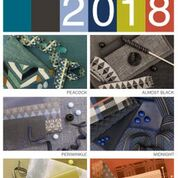
Brentano’s tenth annual color forecast highlights refined colors from Brentano’s collection, to new, more edgy color selections that are here to stay. Three new vivacious colors (Red Rocks, Citron and Periwinkle) add personality and excitement while evolving colors (Midnight, Almost Black and Peacock) highlight timeless glamour.

“Classic colors continue to be popular in the industry but they have begun to evolve in a way that makes them more dynamic and interesting,” says Brentano’s Senior Designer Aaron Mensik. “As a company, we have grown and in doing so our color palette has become more enriched and diverse.”

Midnight – Romantic and elegant, Midnight has continued to be a prevalent color throughout the years. This exquisite jewel tone accommodates a tailored look making it the optimal choice for opulent interiors.

Peacock – Celebrating a diversity of color, Peacock showcases a sensational teal with hints of majestic blue. A staple among Brentano Fabrics, Peacock enhances palettes with its serene nature and dimensional characteristics.

Almost Black – A new classic, Almost Black offers an alternative to jet black with subtle shades of grey. Assertive without being overbearing, Almost Black provides a foundation for complex color schemes. Used habitually in the contract world, this hue has also become a force within residential markets.

Red Rocks – Channeling rust colored sandstone cliffs, Red Rocks brings a warm western richness to any professional or residential space. Subdued but exotic, Red Rocks showcases spicy orange hues highlighted by subtle ocean coral bringing a tangible beauty to modern design.

Citron – A new color within Brentano’s collection, Citron provides bright and energetic accents to any interior. Charming and fun, Citron is earning new deserved presence in the marketplace with its unique blend of yellow and green.

Periwinkle – Periwinkle is stylish, invigorating, fresh and vibrant. The interplay of light purples and muted blues give Periwinkle a romantic but versatile personality that’s welcoming and cool in every sense of the word.

SMOKE VENTS ENHANCE SAFETY AT ROCKET PLANT

Smoke vents are a critical piece of roofing equipment for nearly every manufacturing and commercial facility. Besides providing daylighting, vents also allow smoke, heat and hot gasses to escape, giving workers a visible route for a safe and swift exit in the event of a fire.

Smoke vents were especially essential in the construction of a new rocket manufacturing facility for Blue Origin in Florida near NASA’s Kennedy Space Center. Blue Origin, a commercial company innovating on reusable rocket technology, needed a high quantity of vents with special 20-inch curbing to construct its 750,000-square foot facility. The BILCO Company of New Haven, Conn. provided 93 vents for the project.

Ray Breedlove, of Atlanta-based Compton Sales, was contacted by Heely Brown, a distributor in the Atlanta area, to discuss smoke venting requirements for the facility. While the initial scope of work for the facility was vague, Compton Sales and Heely Brown worked to verify specifications and to develop a quote for the roofing contractor. They contacted Jeff Smith from Building Specialties, the BILCO representative in Florida, and discovered the roofing contractor who won the project. Smith, Breedlove and Heely Brown officials collaborated to sharpen BILCO’S pricing and secure an order for 93 Lumivent Smoke Vents.

“Robert Riley at BILCO helped us get multiple quotes in a timely manner as more information came in about the project,’’ Breedlove said. “TR Beurer was also instrumental in helping us offer the right price and lead-time to secure the order.”

The architect required a 20-inch curb on the 48-inch x 96-inch smoke vents. The standard curb size is 12 inches, but BILCO moved swiftly to meet the request. “Robert and TR did a great job in addressing the size of the job and the changes that occurred during the quoting and re-quoting process,’’ Breedlove said. “They fine-tuned the price, and the specifications.”

As with all BILCO automatic fire vents, the Lumivent is designed to open automatically in the event of fire, allowing smoke, heat and gases to escape from a burning building, and assisting firefighters in their containment efforts. Fire vents are ideally suited for buildings with large expanses of unobstructed space such as factories, warehouses and auditoriums.
The Lumivent features translucent Lexan® Thermoclear® glazing, which maximizes light transmittance while minimizing solar heat gain and is surface treated to prevent ultraviolet degradation.

Vent actuation is accomplished with BILCO’s patented Thermolatch® II latching mechanism. This mechanism, the heart of BILCO’s automatic fire vents, provides reliable vent operation and prevents inadvertent opening of the covers that can be caused by wind or building vibrations. The curb-mounted Thermolatch® II also allows the covers to be re-set from the roof level in a safer, more expedient manner.

The Lumivent features flat polycarbonate panels that are incorporated into a sloped cover design to meet both UL 793 and International Building code requirements. The sloped design encourages embers to roll off the covers rather than burn through, which is the intent of the fire protection standards. Compliance to both standards provides a high level of defense and makes the Lumivent one of the safest daylighting vent options on the market.

With all the chemical compounds involved, rocket manufacturing is an especially dangerous business. Workers at the facility can feel safer knowing that the structure will be properly ventilated should a fire occur.

About BILCO

For over 85 years, The BILCO Company has been a building industry pioneer in the design and development of specialty access products. Over these years, the company has built a reputation among architects, and engineers for products that are unequaled in design and workmanship. BILCO – an ISO 9001 certified company – offers a line of roof hatches, automatic fire vents, floor access doors, natural ventilation products, smoke and fire curtains, and a complete line of residential access products. BILCO is a wholly owned subsidiary of AmesburyTruth, a division of Tyman Plc. For more information, visit www.bilco.com.

About AmesburyTruth™

AmesburyTruth™ is a leading manufacturer of window and door extrusions, hardware, and sealing systems, which are used by leading window and door manufacturers throughout North America, for both residential and commercial markets. Based in Edina, Minnesota, the company has facilities throughout North America. The company is a subsidiary of Tyman Plc. (London Stock Exchange: TYMN). Tyman Plc, headquartered in London, is a leading international supplier of components to the window and door industry. Visit www.amesburytruth.com .